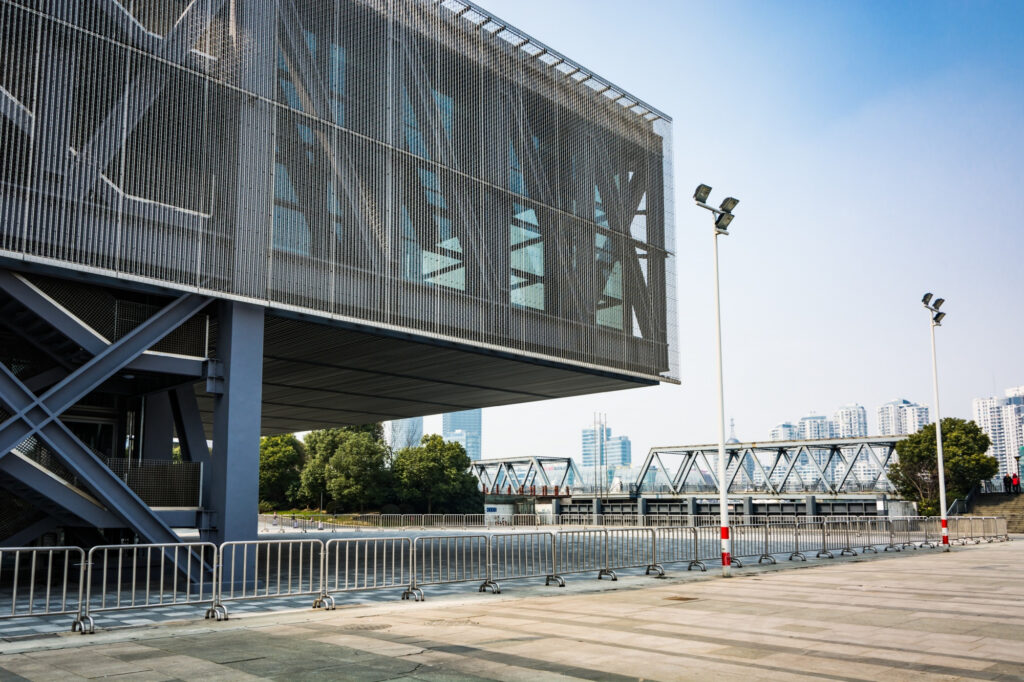
Pre-engineered metal buildings are, in many ways, the buildings of the future, even though they are very much the buildings of today and have become an established part of the architecture of the 21st century. The advantages of this method of construction range from the economical to the practical, with speed of construction high on the list. Pre-engineering offers huge advantages, with parts made off-site, ready to be assembled quickly and easily where it is needed.
But the metal buildings industry is not resting on its laurels. There is still much work to be done to convince those who are stuck in the era when this was all about aircraft hangars. As such, the industry is addressing the subject from multiple angles, and we will look at the practical aspects later, but first let’s consider aesthetics.
Even normally pragmatic people will admit that on one occasion they chose a particular car because they liked the color or the shape rather than the performance, and the same can be said of buildings. Many a romantic has been swayed by an attractive façade with stone or brick, rather than thinking solely of its suitability for the project.
Global Steel Industry Trends
The practical attributes of metal buildings are now widely recognized, and new customers are bringing with them requests for custom design and engineering, with mezzanine floors, facias and canopies among what are not necessarily merely cosmetic considerations but ways of making a building more suited to its purpose.
Ambience is important in any building, whether it is for the benefit of residents, workers or customers, and metal buildings can now be given textures and colors inside and out which can make a big difference to public perception of the business occupying the space.
New technologies in the steel industry and more particularly pre-engineered metal buildings mean that it doesn’t have to be all gray and metallic. Earth tones can introduce a more welcoming, warm feeling.
The point is that you can have all the advantages of a pre-engineered steel building with plenty of that x-factor that makes stone townhouses and log cabins so appealing.
Building Information Modeling (BIM)
Building Information Modeling (BIM) is making a huge difference in the world of metal buildings with precise 3D modeling helping all aspects of construction and outfitting. This is absolutely appropriate because buildings themselves are becoming smart, with innovations such as the Internet of Things taking certain functions out of human hands and into the realms of inter-device communication.
When the building itself is co-ordinating lighting, temperature control and security, with human supervision keeping an eye on things, the scene is set for smooth operation and preventive maintenance, with devices reporting any areas of deterioration or decay before they turn into problems.
Even Better Structural Integrity and Fire Resistance
The nature of metal buildings makes them good in the areas of structural integrity and fire resistance, but the steel buildings industry keeps incorporating new developments and using new materials to improve what is already an excellent record in the construction business.
It takes a huge amount of heat to trouble a steel structure, but modern coatings raise the bar still further. Intumescent coatings, for instance, expand into a thick layer of char when exposed to extreme heat, using the thermal force itself to add resistance.
There are also fireproof boards and sprayed fire-resistive materials (SFRMs), AKA cementitious coatings, which are a combination of cement, gypsum and mineral fibers. Concrete itself is a traditional way of coating and protecting steel, but the modern methods are dramatically more effective. The above are what are known as passive fire protection methods.
Active fire protection systems include sprinkler systems, fire alarms, smoke detectors and emergency lighting, all of which are constantly being refined and improved, so if you inherited older systems when you took over the building, it is recommended you have a fire prevention company check it over and upgrade your protection where necessary.
Innovation in the Steel Buildings Industry: Security
Steel buildings lend themselves perfectly to modern security systems, with metal being such an obliging material to work with as regards attaching security devices. Digital devices from cameras and alarms to locks are very compatible with steel structures, and with remote monitoring meaning it is possible to keep an eye on things even when you’re many miles away from the building, security has never been so good or so convenient.
There is also the kind of security we take for granted with steel as regards doors and larger entrances. Steel rolling doors give excellent access when you need it but are difficult for intruders to force.
Perhaps the most striking thing about new technologies in the steel industry is that the physical profile is so slim. The age-old notion that stronger must mean thicker has been turned on its head by developments in steel and the way it is shaped.
From the moment the steel girder was developed as more than a simple, flat length, steel has ruled the construction world. Whether they be i-beams, h-shaped, box shaped, T-shaped or Z-shaped, simple physics and an understanding of the forces involved have brought strength and stability where they were most needed.
The New Essential: Sustainability
No study of construction methods is complete now without a look at sustainability, and the endless recyclability of steel without loss of strength makes it a star of the ecological firmament.
While timber of the dimensions suitable for construction is rarely suitable for reuse in the same way, and concrete ends up as rubble, with stone needing considerable reworking to adapt to a new format, steel can go again in a similar shape or a very different form.
That is one more reason why innovation in the steel industry keeps it at the forefront of construction.